LATO.2: 3D Generator — What It Does and What You Need to Run It

LATO.2 is an open-source 3D generator that tackles the image-to-3D task: it turns an image into a polygon mesh. The developer is 0x4C48. The code is published on GitHub, the model weights are on Hugging Face, and there is a separate project website.
What it does
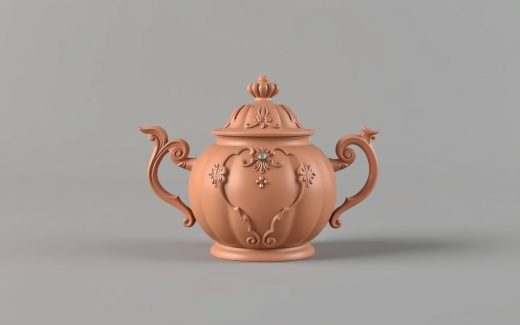
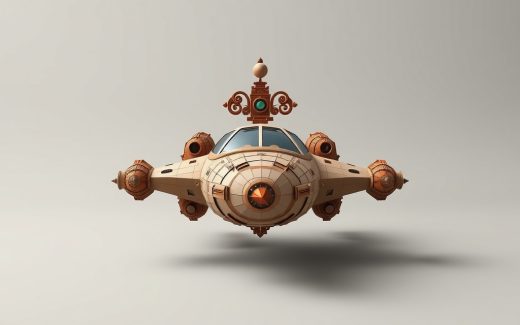
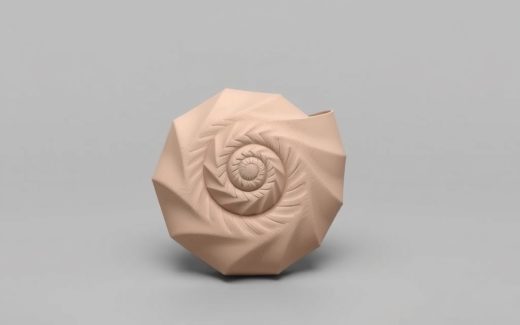
As described by the authors, LATO.2 generates a 3D mesh from an image. For each model, the output includes a _pred.obj file with the finished mesh, a _pred.ply file with vertices, variants in voxel coordinates *_coords.* in the range [0, 1024), and _render.png — the view used for conditioning via DINOv2.
The authors describe the project as the official repository for the paper "LATO.2: Factorized 3D Mesh Generation with Vertex and Topology Flow". The repository lists the tags: 3d, 3d-models, 3d-reconstruction.
What you need to run it
The code is written in Python. As described by the author, running it requires Python 3.10, PyTorch 2.6.0 and CUDA 12.4. The build script creates a conda environment named lato2. Building the CUDA extensions requires the CUDA toolkit — nvcc.
According to the developer, generation takes about 5 seconds per mesh on a single H800 accelerator, and about 8 GB of VRAM is enough to run it. This is the author's estimate, not an independent measurement.
The code is distributed under the MIT license, and the model weights are also MIT. The license permits use, modification and distribution.
Who it suits
The tool is aimed at those who need to quickly produce 3D meshes from images and who are prepared to work with a CUDA environment. The open source and weights let you embed the generator into your own pipelines and adapt it to your task.
Those without a CUDA-capable graphics card and sufficient VRAM will find it difficult to run. The project also involves building CUDA extensions, so familiarity with the CUDA toolkit and conda environments is required.
LATO.2 is a research generator with open source and weights, focused on generating meshes from images. It requires CUDA-compatible hardware and skills in working with a Python environment, but it delivers finished meshes in the common OBJ and PLY formats.
Fact sheet
Repository · Model on HuggingFace · Developer’s site
| Task | image-to-3d source |
|---|---|
| Code license | MIT source |
| Weights license | mit source |
| Platform | CUDA per the author’s description source |
| VRAM | 8 GB per the author’s description source |
| Export formats | obj, ply per the author’s description source |
| Python | 3.10 per the author’s description source |
| Language | Python source |
| Last code change | 2026-11-22 source |
| Repository created | 2026-07-12 source |
| GitHub stars | 331 source |
|---|---|
| Forks | 12 source |
| Downloads per month | 0 source |
| Model updated | 2026-11-18 source |
Values are collected automatically from official sources and were checked on 2026-11-22. Each one links to its source, and values taken from the developer’s pages also carry a verbatim quote — hover over the note. Pricing and versions are shown as of the check date and change most often; verify on the vendor’s site before buying.